
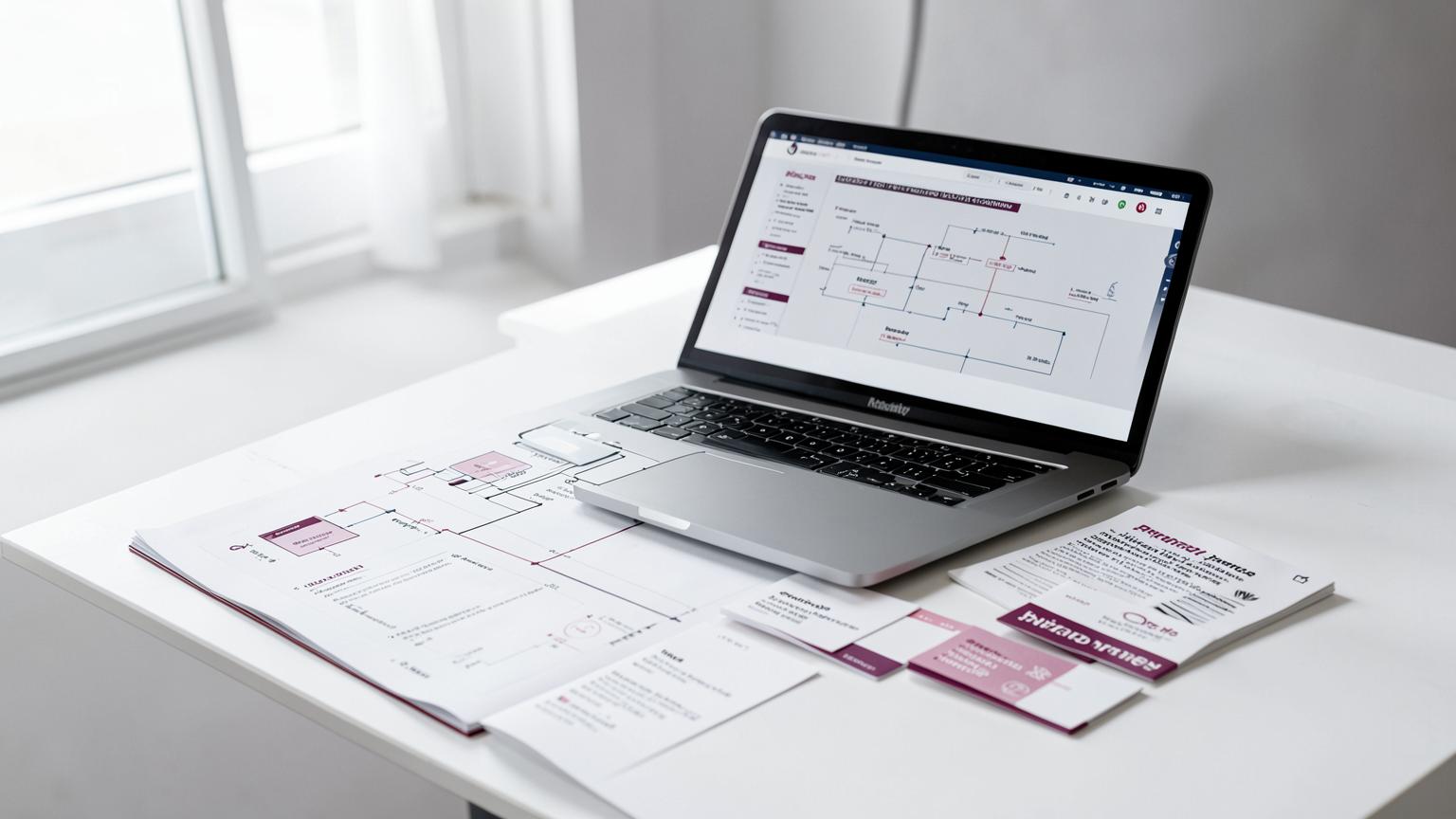
External support is most useful when the business has a consequential workflow or decision, an internal owner, and a need to move faster without making avoidable technology or operating-model mistakes.
Good reasons to bring in outside support
A consultancy can help when leadership sees several possible opportunities but lacks a shared way to prioritise them, when a workflow crosses teams and systems, or when internal experts cannot step away from daily delivery to redesign the work.
It is also useful when an early prototype needs to become a controlled, owned operating process rather than remain an isolated experiment.
- The opportunity matters commercially
- Several functions or systems are involved
- The team needs independent challenge
- Delay has a visible cost
Signs the business is not ready yet
Do not begin with a broad instruction to 'add AI everywhere'. Avoid projects with no operational owner, no access to the people doing the work, or no willingness to measure the present state.
A consultancy cannot compensate for absent ownership or a refusal to make decisions. It should make those dependencies explicit before implementation begins.
What a credible engagement should produce
The outcome should be usable by the business: a prioritised opportunity, an agreed baseline, a working change, documented controls, clear ownership, and a way to measure what happened.
A roadmap can be valuable, but it should connect to decisions, sequencing, and implementation—not simply catalogue possible tools.
- A specific business outcome
- Evidence and assumptions
- Defined human and system responsibilities
- A practical implementation path
- Capability transferred to the team
Questions to ask a prospective consultancy
Ask how they select opportunities, validate estimates, manage sensitive data, handle exceptions, and leave capability behind. Ask who will do the work after the sale.
Look for a willingness to narrow the project, state uncertainty, and explain what should not be automated.
Make the first conversation concrete
Bring one workflow or decision that matters, who owns it, what is currently painful, and any numbers already available. A useful first conversation should leave you clearer about the problem even if no engagement follows.
one7x begins with a free, no-obligation Strategy Call and uses a focused sprint when the first need is diagnosis or proof.